Why the Best Bet Is Sometimes No Bet
Why the Best Bet Is Sometimes No Bet
Most casual bettors hate passing.
The board is full. The games are on. The odds are moving. The group chat is screaming. Someone has found “the lock of the night,” which is usually betting slang for “we are about to learn a lesson.”
But sharp betting is not about having action.
It is about having an edge.
Those are not the same thing.
Sometimes the best move is to close the app, watch the game, and keep your bankroll out of it. That sounds boring, but boring is underrated in betting. Boring keeps you alive. Boring stops you from turning a clean week into a donation drive.
The sportsbooks love action bettors. They love people who need to bet every primetime game. They love “I have a feeling” parlays. They love emotional revenge bets after a bad beat.
They do not fear action.
They fear discipline.
The Betting Board Does Not Owe You a Play
A full slate can trick you into thinking value must be hiding somewhere.
Maybe it is. Maybe it is not.
If there are 12 NBA games or 15 MLB games, that does not automatically mean you need a ticket. More games create more options, but they also create more ways to talk yourself into weak positions.
The market can be efficient. Lines can be stale but not wrong. Your model can like a side by half a point, but that does not mean the edge is strong enough to beat the vig.
That last part matters.
A projected edge needs to clear the price you are paying to bet. If your opinion is tiny and the sportsbook margin is not, you may just be paying tax on confidence.
That is not betting sharp. That is buying entertainment at market rate.
Thin Edges Are Where Bankrolls Get Weird
The hardest spots are not the obvious bad bets.
Most bettors can avoid a terrible line if it is clearly terrible. The real danger is the almost-play.
Your model leans one way. The injury news is uncertain. The market moved slightly. The price is okay, but not great. You kind of like it. You do not love it. But it is the late game, and late games are dangerous because they know you are bored.
That is where bankroll discipline gets tested.
A thin edge can be playable if your numbers are strong and the price is right. But if the bet only exists because you want something to sweat, pass.
A good rule:
• If you loved the bet before checking the odds, slow down.
• If you only like it because it is on TV, pass.
• If the line has moved against you and your edge disappeared, pass.
• If you cannot explain the bet without saying “vibes,” absolutely pass.
Vibes are great for playlists. Less great for beating closing numbers.
Closing Line Value Starts Before You Bet
Bettors often talk about CLV after the fact.
Did you beat the close? Did your number improve? Did the market agree with you?
Useful questions.
But the better question comes before the bet:
Can this line realistically move in my favor?
If you are betting into a stale opener, reacting faster than the market, or catching a mispriced injury adjustment, good. You may have something.
If you are betting a fully mature line five minutes before tip because you suddenly feel brave, that is a different story.
Late bets can be valuable if they are based on new information or clear market overreaction. But late bets made out of boredom are usually just expensive entertainment.
The market is not perfect, but it is not asleep either.
Passing Protects Your Good Bets
Every weak bet competes with your best bets.
That sounds obvious, but bettors ignore it constantly.
Bankroll is not only money. It is attention, emotional control, and risk capacity. If you scatter units across mediocre plays, you make it harder to stay disciplined when a real edge appears.
This is especially true during long seasons.
MLB will give you endless daily temptation. NBA gives you injury chaos, rest spots, and late news. NFL gives you a week to overthink one side until you have built a full personality around a 2.5-point spread.
You do not need to fight every battle.
The best bettors are selective because selectivity lets them press when the spot is actually strong.
No Bet Is Not Weak. It Is a Position
There is a weird ego problem in betting.
People think passing means they do not know enough. Or that real sharps always have a side. Or that sitting out is somehow cowardly.
Wrong.
No bet is a position.
It says the price is not good enough. The information is not clean enough. The edge is not big enough. The timing is not right. The market already corrected.
That is not weakness. That is risk management.
Sportsbooks do not make money because they predict every game perfectly. They make money because they price risk, manage volume, and let bettors make emotional decisions.
You should do the same thing from your side.
Price risk. Manage volume. Avoid emotional nonsense.
How to Know When to Pass
Here is a practical pass checklist.
| Question | If the Answer Is No |
|---|---|
| Do I have a clear edge? | Pass |
| Is the price still playable? | Pass |
| Did I already miss the best number? | Usually pass |
| Can I explain the bet in one clean sentence? | Pass |
| Is this bet part of my normal process? | Pass |
| Am I betting because I am bored or chasing? | Definitely pass |
| Would I bet this if nobody else saw it? | If not, pass |
That final question is sneaky.
A lot of bets are social bets. You want the screenshot. You want the sweat. You want to be the one who called it.
That is fine for fun, but do not confuse it with edge.
The Most Expensive Bets Are Often the Unnecessary Ones
Bad beats hurt. Losing good bets hurts too. But the most annoying losses are the ones you knew you did not need.
The random add-on. The late-game boredom bet. The fifth play after you already had a strong card. The “small parlay for fun” that quietly becomes a habit. The chase after a brutal ninth-inning bullpen meltdown.
Those are the leaks.
Not one giant mistake. Just small, unnecessary bets stacking up over time.
If you remove those from your betting record, your results usually improve without needing a better model, better data, or a secret insider source.
Sometimes the edge is not finding more winners.
Sometimes it is deleting dumb losers.
Final Thought: Bet Less, Bet Better
Sharp betting is not about being busy.
It is about being right often enough, at the right price, with the right stake, over enough volume to let the edge show up.
That does not mean betting every game. It does not mean chasing every line move. It does not mean forcing action because the slate looks fun.
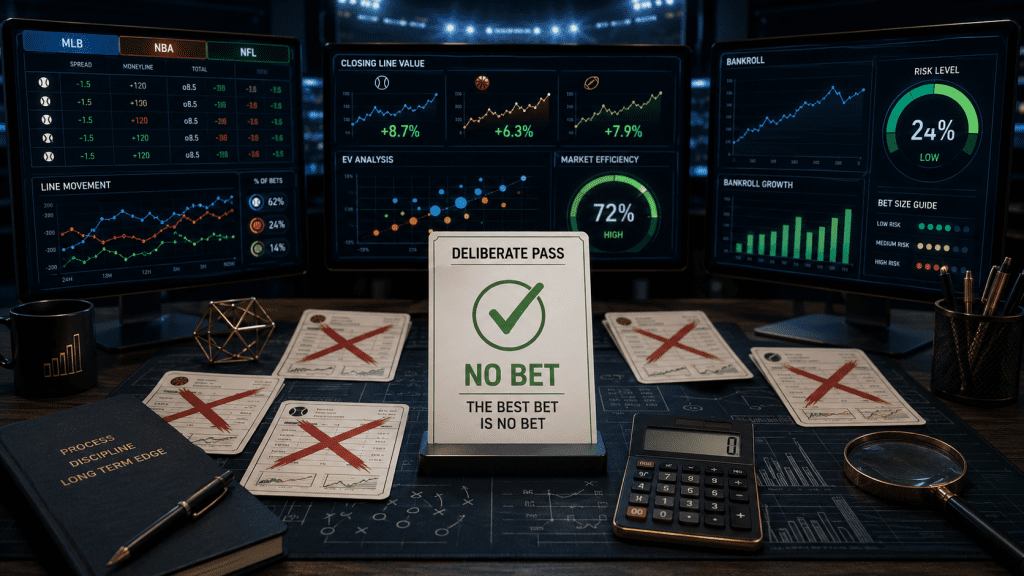
Some days, the best bet is no bet.
Not because you are scared.
Because the number is not there.
And if you can accept that without opening another app and building a three-leg emotional support parlay, you are already ahead of most bettors.