CS2 Betting vs. NHL: Why Esports Volume is Exploding
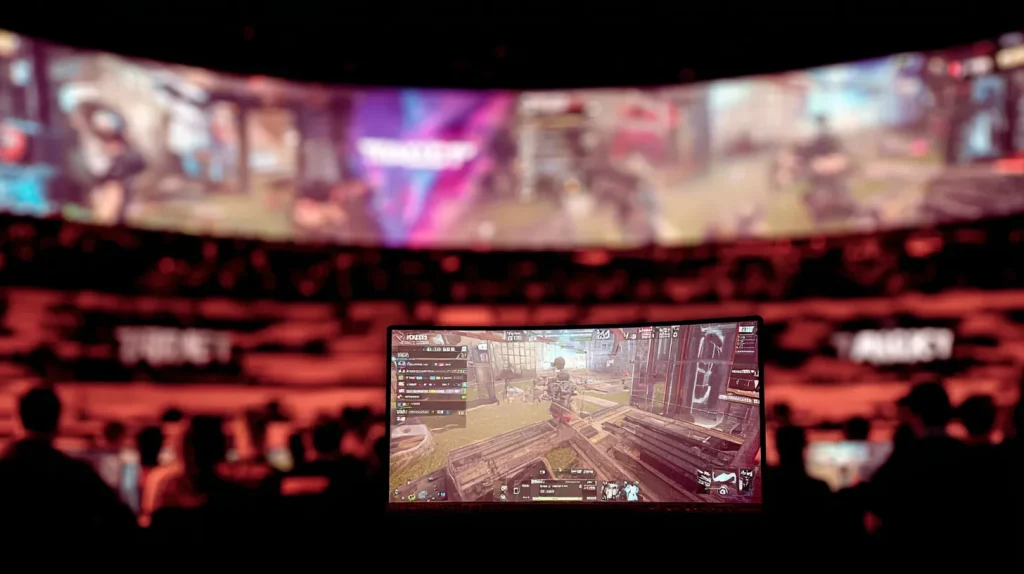
The CS2 Economy: When Betting Volume Overtakes the NHL
For decades, the “Big Four” North American sports—NFL, NBA, MLB, and NHL—were the unshakeable pillars of the sports betting industry. If you were a serious bettor, you grinded baseball in the summer and football in the winter. Esports was treated as a novelty, a niche side-show for kids in basements betting $5 skins on unregulated websites.
That narrative is dead. In 2026, Counter-Strike 2 (CS2) has quietly become a liquidity monster that rivals, and on many days exceeds, the betting volume of the NHL. This isn’t just about popularity; it’s about the mechanics of the game itself. While hockey bettors are waiting for a puck drop at 7:00 PM EST, CS2 bettors are trading a 24/7 global market with deeper liquidity, faster settlement, and more exploitable inefficiencies than almost any traditional sport.
The “Silent Giant” of betting has arrived, and if you aren’t paying attention to the economy of a Terrorist vs. Counter-Terrorist pistol round, you are ignoring one of the most profitable sectors in the entire gambling ecosystem.
The Volume Anomaly: Why Tuesday Morning Matters
To understand why CS2 volume is exploding, you have to look at the calendar. The NHL has a season. Players rest. Teams travel. There are massive gaps in the schedule.
Counter-Strike is borderless and sleepless. At 10:00 AM on a Tuesday, there is zero NFL action. There is zero NBA action. But in the world of CS2, there is likely a Tier 1 tournament happening in Katowice, Cologne, or Shanghai. Because the audience is global, the liquidity never sleeps.
For a sportsbook, this is the holy grail. It bridges the gap between traditional sports seasons. But for the bettor, it creates a unique opportunity. Because the volume is so high and continuous, the “closing line” efficiency on CS2 matches is becoming sharper than college basketball. The sheer amount of money changing hands on match-winner markets means that “smart money” can move lines instantly, creating arbitrage opportunities for those paying attention.
Beyond the Match Winner: The Specialized Markets
However, the real value in CS2 isn’t in betting on who wins the match. It’s in the specialized markets that traditional bookmakers struggle to price correctly. Generalist sportsbooks (like your standard DraftKings or FanDuel) often copy-paste their odds from data feeds without understanding the nuance of the game.
This is where specialist platforms shine. A deep dive into Thunderpick eSports betting markets reveals options that simply don’t exist on retail apps.
- Map Winner: In a Best-of-3 series, teams map picks are strategic. A team might be the underdog for the match but a heavy favorite on their own map pick (e.g., Mirage or Nuke). Betting on “Map 1 Winner” rather than “Match Winner” allows you to isolate specific tactical advantages.
- Round Handicaps: Just like an NFL point spread (-3.5), you can bet on a team to cover a round spread (-4.5 rounds). This is crucial in matches where a favorite is expected to dominate but the moneyline (-500) is unbettable.
The “Economy” Game: Predictable Variance
The single biggest differentiator between betting on hockey and betting on CS2 is the “Economy.” In hockey, a goal is a goal. The game state changes, but the physics don’t.
In CS2, the game state dictates the equipment. If a team wins a round, they get money to buy AK-47s and sniper rifles (AWPs). If they lose, they might be stuck with Glocks and USP-S pistols. This creates a “Snowball Effect” that is mathematically modelable.
Smart bettors track the “Economy” of the match.
- The Eco Round: If Team A has $1,500 per player, they are likely to “save” (buy nothing) to afford guns in the next round. Their win probability for the current round drops to near 10-15%.
- The Force Buy: If Team A is desperate, they might spend all their money on sub-par submachine guns. This increases variance.
By reading the economy, you can live-bet rounds with massive precision. If you know a team is on a “hard eco,” betting the opposing team’s round handicap is often free money—something algorithms sometimes lag in adjusting for.
The Pistol Round: The High-Stakes Coin Flip
Every CS2 match starts with a Pistol Round (Round 1 and Round 13). Everyone starts with $800 and basic pistols. No helmets. No rifles.
To the untrained eye, this looks like a coin flip. To the sharp, it is a specialized skill set. Some teams practice pistol tactics religiously. They have set plays designed to overwhelm a site with pure aim. Other teams are “slow starters” who rely on utility and strategy later in the game.
Betting on the “Pistol Round Winner” is a high-variance market, but because the odds are often close to even money (-110 / -110), having an edge here is incredibly valuable. It sets the tone for the half. A team that wins the pistol round usually wins the next two rounds (the “anti-eco” and “bonus” rounds), effectively giving them a 3-0 lead. In betting terms, winning the pistol round bet often correlates to winning the First Half Handicap bet.
The “Generalist” Trap
The mistake most new esports bettors make is trying to bet CS2 on a traditional sports app. These apps treat esports as a second-class citizen. They have high “vig” (often 7-8%), low limits (capping you at $100 or $500), and slow grading.
Dedicated crypto-native books understand the speed of the game. They offer higher limits because they have the liquidity to absorb the action. They settle bets instantly when the map ends, not hours later. If you are betting on a platform that doesn’t know the difference between a “defuse” and a “plant,” you are paying a tax on your ignorance.
Conclusion: Respect the Virtual Ice
The days of dismissing esports betting are over. The volume is real, the liquidity is deep, and the edges are still there for those willing to learn the mechanics of the economy.
While the NHL is worrying about TV ratings and lockouts, the CS2 ecosystem is churning out millions of dollars in handle every single day. It is a pure market, stripped of the external noise of weather, referees, and travel schedules. It is just math, money, and aim. If you are looking for action on a Tuesday morning, stop looking for a hockey game in Russia and start looking at the map vetoes in Cologne. The smart money has already moved.